For homeowners and property managers seeking to minimize disruption while maximizing savings, the ideal window to replace a roof in the United States falls between late spring and early fall, when temperatures are moderate, precipitation is lowest, and roofing crews are most readily available. Planning your project during this period not only reduces the risk of weather‑related delays but also leverages the seasonal dip in material costs that contractors typically pass on to customers. For a detailed cost breakdown of a typical 2,500‑square‑foot roof replacement in 2026, see the comprehensive guide.
Why Seasonal Timing Matters for Roof Replacement
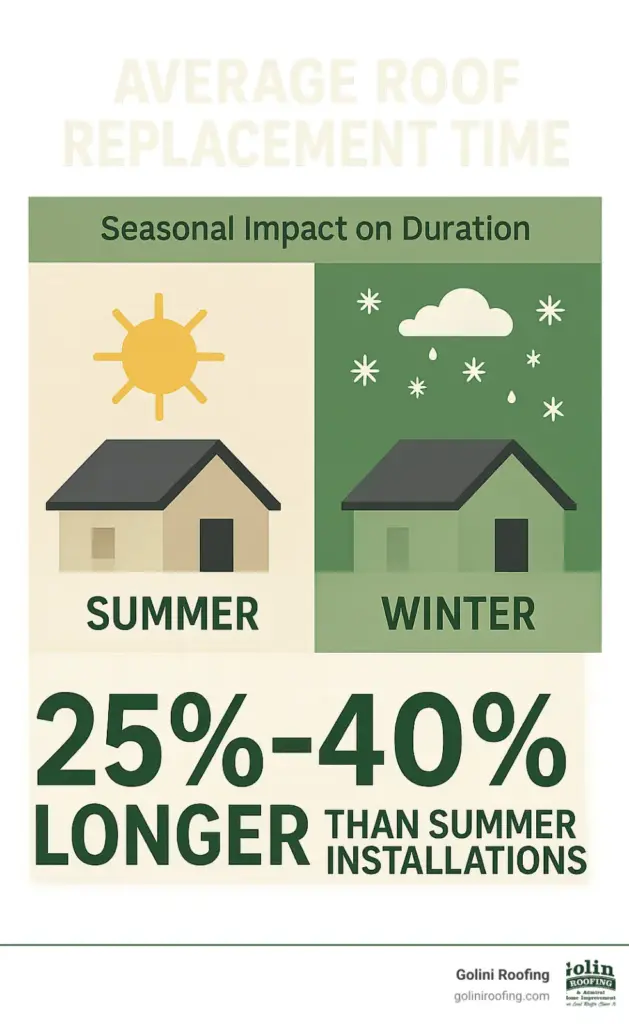
The roofing industry is highly sensitive to climate patterns. Extreme heat can cause shingles to become brittle, while freezing temperatures make roofing membranes less pliable, leading to installation errors. Moreover, rain or snow during the installation window can compromise adhesive bonds, force crews to pause work, and increase labor hours. According to the National Oceanic and Atmospheric Administration (NOAA), the months of May through September historically record the lowest average precipitation across most U.S. climate zones, making them the optimal roof replacement season.
Temperature and Material Performance
Asphalt shingles, the most common roofing material, adhere best when ambient temperatures are between 50 °F and 85 °F. Below 40 °F, the sealant on the shingles can freeze, preventing proper sealing. Above 90 °F, the adhesive softens, leading to premature slippage. Metal roofing behaves similarly; thermal expansion can cause fasteners to loosen if installed during peak summer heat. By targeting the shoulder months—April, May, early September—contractors can work within the temperature sweet spot, ensuring material integrity and extending the roof’s service life.
Table of Contents
- Why Seasonal Timing Matters for Roof Replacement
- Temperature and Material Performance
- Labor Availability and Pricing Dynamics
- Regional Climate Nuances
- Northwest and Pacific Coast
- Southwest Deserts
- Midwest and Great Plains
- Southeast and Gulf Coast
- Financial Benefits of Timing Your Roof Replacement
- Step‑by‑Step Guide to Planning a Seasonal Roof Replacement
- 1. Conduct a Pre‑Season Inspection
- 2. Secure Accurate Quotes
- 3. Check Local Weather Trends
- 4. Align Financing and Insurance
- 5. Schedule the Contractor
- Common Mistakes to Avoid
- Case Study: A Mid‑Atlantic Homeowner’s Timing Success
- Frequently Asked Questions
- What is the absolute latest month to start a roof replacement without risking winter damage?
- Do roof warranties expire if the installation occurs outside the recommended temperature range?
- Can I replace my roof during a mild winter if my region experiences no snow?
- How does the choice of roofing material affect the optimal season?
- Conclusion: Timing Is the Hidden Lever for Roof Replacement Success
Labor Availability and Pricing Dynamics
Contractor schedules are another decisive factor. During winter, many roofing companies reduce staff or shift focus to interior remodeling projects, which drives up labor rates due to limited availability. Conversely, in the peak summer months, crews are fully staffed, competition for jobs increases, and many contractors offer promotional discounts to secure business early in the season. The average labor cost for roof replacement in the United States 2026 shows a noticeable dip of 7‑10 % in May and June compared with January and February.
Regional Climate Nuances
While the May‑September window serves as a national baseline, local climate variations demand a more granular approach.
Northwest and Pacific Coast
These regions experience a pronounced rainy season from October through March. Scheduling a replacement in July or August avoids the high precipitation risk. However, extreme summer heat is rare; average highs hover around 70 °F, making the entire summer viable for roofing work.
Southwest Deserts
In Arizona, New Mexico, and parts of California, monsoon storms dominate July and August. Though overall rainfall is low, sudden downpours can cause flash flooding and dangerous site conditions. The optimal window therefore shifts to late May through early July, before the monsoon onset.
Midwest and Great Plains
These areas face unpredictable spring storms and early fall frosts. Early June through mid‑August offers the most stable weather, but it’s crucial to monitor local forecasts for severe thunderstorms that can disrupt lift‑equipment operations.
Southeast and Gulf Coast
High humidity and occasional tropical activity make June through early September risky in coastal zones. When possible, aim for late May or early June, and keep an eye on National Hurricane Center alerts. In years with an early season hurricane, a contingency plan to postpone the project by a few weeks can save thousands in re‑work costs.
Financial Benefits of Timing Your Roof Replacement
Beyond avoiding weather delays, timing influences the overall financial outlay.
- Material Discounts: Manufacturers release “off‑season” pricing on shingles and underlayment in late winter, which contractors pass on during the early spring rush.
- Financing Incentives: Many lenders and credit unions align promotional APRs with the spring construction boom, offering lower rates for projects started before June.
- Insurance Premium Adjustments: Replacing a roof before the policy renewal date can lead to immediate premium reductions. For a step‑by‑step guide on leveraging insurance for a free roof replacement, see How to Get a Free Roof Replacement Through Homeowners Insurance.
Step‑by‑Step Guide to Planning a Seasonal Roof Replacement

1. Conduct a Pre‑Season Inspection
Engage a certified roofing inspector by late February to assess shingle wear, flashing integrity, and ventilation. An early diagnosis provides ample time to secure permits and financing before the high‑traffic months.
2. Secure Accurate Quotes
Use the How to Secure Accurate Roof Replacement Quotes from Licensed Contractors Near You – 2026 Guide to request at least three detailed proposals. Compare line items such as removal, disposal, underlayment, and warranty extensions, not just the headline price.
3. Check Local Weather Trends
Visit the NOAA Climate Data Center (https://www.ncdc.noaa.gov/cdo-web/) and pull the 30‑year average precipitation and temperature for your zip code. Plot the data on a simple spreadsheet to visualize the optimal installation window.
4. Align Financing and Insurance
Coordinate with your mortgage lender or home equity line of credit (HELOC) to lock in rates before the summer rate hikes typically seen in August. Simultaneously, notify your insurer of the upcoming project to capture any premium discounts.
5. Schedule the Contractor
Book the crew at least six weeks in advance for May or early June start dates. Confirm that the contractor has a contingency plan for unexpected rain—such as tarps, temporary roof covers, and flexible labor scheduling.
Common Mistakes to Avoid
Even seasoned property managers can stumble when timing a roof replacement.
- Waiting for “Perfect Weather”: Chasing an ideal forecast can push the project into late fall, when temperatures dip and daylight hours shorten, increasing labor costs.
- Ignoring Material Lead Times: Specialty roofing materials (e.g., slate, high‑end metal) often have 4‑6 week manufacturing windows. Ordering after the peak spring season can delay completion into winter.
- Skipping the Warranty Review: Many manufacturers require installation within a specific temperature range for the warranty to remain valid. Verify this clause before signing the contract.
Case Study: A Mid‑Atlantic Homeowner’s Timing Success
John M., a homeowner in Pennsylvania, noticed granular loss on his 30‑year‑old asphalt shingle roof in February 2026. Following a professional inspection, he consulted three local contractors and secured quotes by early March. By scheduling the replacement for the first week of May, he avoided the region’s heavy April rainstorms and completed the project before the scorching July heat. The result? A 12 % reduction in labor costs versus a winter start, no weather‑related delays, and a 5‑year extension on his warranty due to proper temperature installation. John’s experience mirrors the data from the Average Asphalt Shingle Roof Replacement Cost in USA 2026 report, which highlights a 9 % average savings for projects started in May‑June.
Frequently Asked Questions
What is the absolute latest month to start a roof replacement without risking winter damage?
In most U.S. regions, early October is the cutoff. By this time, temperatures begin to fall below the 50 °F threshold, and daylight hours shrink, making it difficult for crews to work safely and effectively.
Do roof warranties expire if the installation occurs outside the recommended temperature range?
Many manufacturers include a temperature clause; installing outside the 50‑85 °F window can void the warranty or require a supplemental warranty purchase. Always verify the warranty terms before signing.
Can I replace my roof during a mild winter if my region experiences no snow?
If the forecast predicts consistent temperatures above 40 °F and minimal precipitation, a winter installation is feasible. However, expect a 5‑8 % premium on labor due to reduced crew availability.
How does the choice of roofing material affect the optimal season?
Metal and tile roofs are more tolerant of temperature fluctuations than asphalt shingles, but they still benefit from moderate weather for proper sealing and fastening. For a cost comparison between metal and asphalt options, consult the Metal Roof Replacement Cost Compared to Asphalt Shingles – 2026 Cost Analysis & Savings Guide.
Conclusion: Timing Is the Hidden Lever for Roof Replacement Success
Choosing the best time of year to replace a roof in the United States is not merely a matter of convenience; it is a strategic decision that influences material performance, labor pricing, insurance benefits, and overall project risk. By targeting the late‑spring to early‑fall window, aligning with regional climate data, and coordinating financing and contractor schedules, homeowners can achieve a smoother installation, lower total costs, and a longer‑lasting roof. Incorporate the steps outlined above, avoid common pitfalls, and leverage authoritative resources to ensure your roof replacement adds maximum value to your property.
