When a severe storm leaves your roof ripped, dented, or missing shingles, the most urgent question is how much of the repair or replacement will be covered by your insurance and what you’ll actually pay out‑of‑pocket. Understanding the variables that drive roof replacement cost for insurance claims after storm damage—from regional labor rates to deductible calculations—enables homeowners and professionals to negotiate a fair settlement, avoid surprise expenses, and keep the project compliant with local building codes. For a baseline, see the average asphalt shingle roof replacement cost in the USA for 2026, which provides a useful reference point before you dive into claim specifics.
Why Storm Damage Claims Differ From Standard Roof Repairs
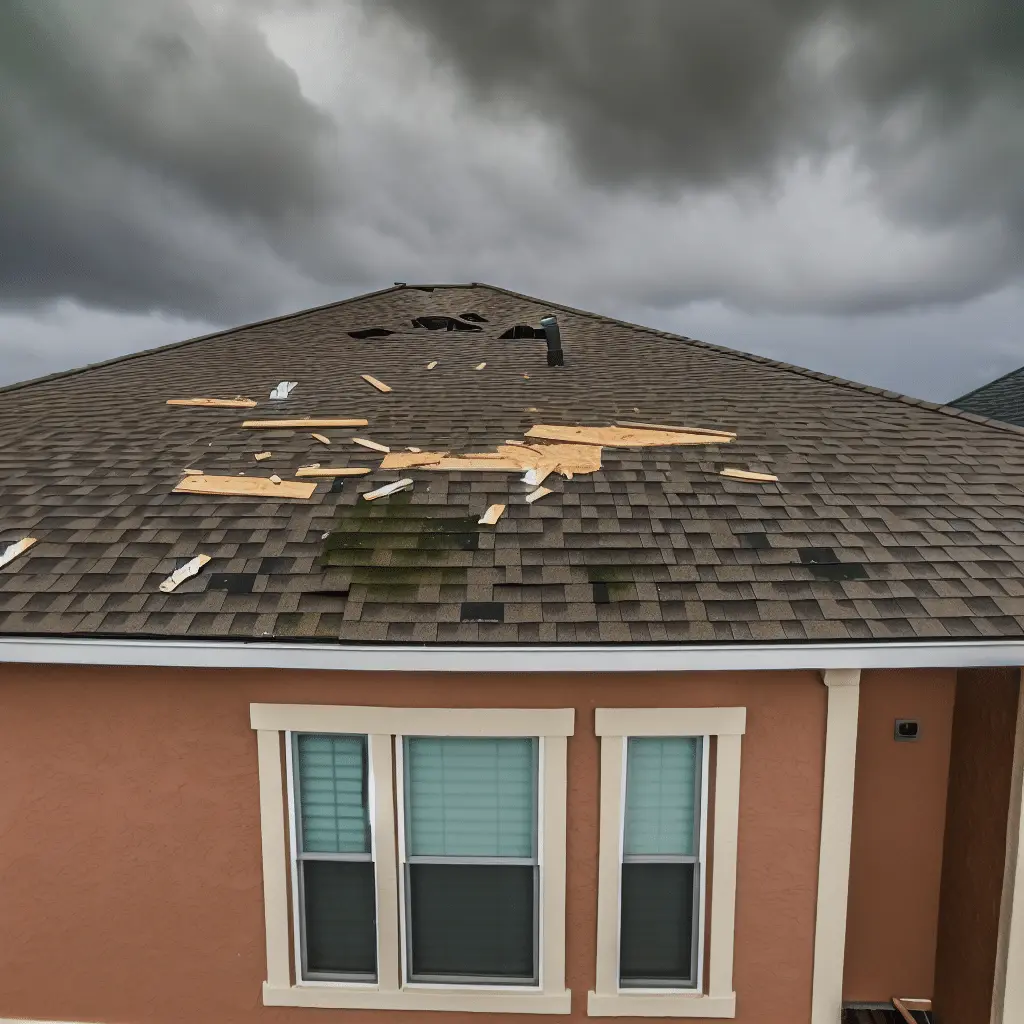
Storm‑related claims are evaluated under a different set of criteria than routine maintenance. Insurance policies typically cover “sudden and accidental” damage, but they also factor in:
- Extent of structural loss: Complete decking replacement versus spot repairs.
- Local building‑code upgrades: Many states, such as California, require that rebuilt roofs meet the most recent codes, inflating costs.
- Deductible amount: A higher deductible shifts more expense to the homeowner.
- Depreciation and age of the roof: Older roofs may receive a lower settlement based on actual cash value (ACV) rather than replacement cost value (RCV).
The Insurance Information Institute (2026) reports that storm‑related roof claims average 22% higher than ordinary repair claims because adjusters must assess wind uplift, hail impact, and water intrusion simultaneously.
Table of Contents
- Why Storm Damage Claims Differ From Standard Roof Repairs
- Key Factors That Influence the Claim Settlement
- 1. Geographic Location and Labor Costs
- 2. Material Selection and Market Volatility
- 3. Scope of Damage Assessment
- 4. Policy Limits, Deductibles, and Depreciation
- Step‑by‑Step Guide to Maximizing Your Claim
- Common Pitfalls and How to Avoid Them
- Case Study: A Midwest Homeowner’s Storm Claim
- Financial Strategies When the Payout Falls Short
- FAQ: Quick Answers to Common Queries
- What is the difference between ACV and RCV?
- Do insurance policies cover temporary roof tarps?
- Can I choose any contractor for the rebuild?
- How does a deductible affect my claim?
- Will my premium increase after filing a roof claim?
- Looking Ahead: Trends Shaping Roof Claim Costs in 2027
Key Factors That Influence the Claim Settlement
1. Geographic Location and Labor Costs
Labor rates vary dramatically across the United States. According to the National Association of Home Builders (NAHB, 2026), the average labor cost per square foot for roof installation ranges from $3.50 in the Midwest to $7.20 in coastal California. When you combine these rates with material prices, the total claim can swing by tens of thousands of dollars. Use the roof replacement cost calculator by zip code to obtain a precise estimate for your area.
2. Material Selection and Market Volatility
Post‑storm demand often spikes for popular roofing materials such as architectural shingles, metal panels, and synthetic tiles. The 2025 Roofing Materials Market Report (Clayton Research) notes a 15% price increase for high‑quality asphalt shingles in the first quarter of 2026 due to supply chain constraints. If your policy specifies “like‑for‑like” replacement, the insurer may cover the higher market price, but only if you can document the pre‑storm material specifications.
3. Scope of Damage Assessment
Insurance adjusters rely on a detailed roof inspection report, often prepared by a licensed roofing contractor. The report should include:
- Photographic evidence of wind uplift, hail dents, and water stains.
- Measurements of affected squares (one square = 100 sq ft).
- Verification of any underlying deck rot or insulation damage.
A comprehensive report reduces the risk of the insurer issuing a lowball estimate based on superficial observations.
4. Policy Limits, Deductibles, and Depreciation
Most homeowners’ policies set a maximum limit for roof coverage, typically expressed as a dollar amount per square foot. If the replacement cost exceeds that limit, the homeowner bears the excess. Additionally, if the policy is based on ACV, the insurer will subtract depreciation—often calculated at 1% per year of the roof’s age—before adding the deductible.
Step‑by‑Step Guide to Maximizing Your Claim
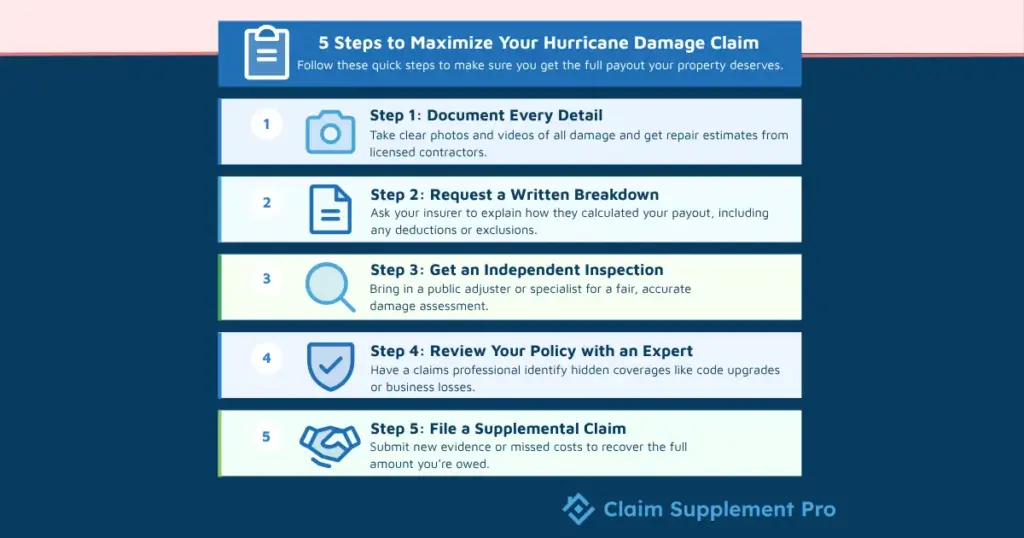
Follow these actionable steps to ensure you receive the full replacement cost your policy promises.
- Document the damage immediately. Take high‑resolution photos and videos from multiple angles. Include a timestamped video walk‑through to capture the full extent of wind and hail damage.
- Secure a professional roof inspection. Hire a licensed contractor experienced with insurance claims. Their written estimate will serve as a technical backbone for the adjuster’s assessment.
- Submit a detailed claim packet. Attach the inspection report, material invoices, and any relevant receipts for temporary tarps or emergency repairs.
- Negotiate the adjuster’s estimate. If the adjuster’s figure seems low, reference the best roofing replacement financing options guide to demonstrate realistic financing costs and market rates.
- Review the final settlement. Confirm that the amount covers RCV, includes code‑upgrade allowances, and reflects the deductible you agreed to.
- Plan for the rebuild. Once approved, schedule the work with a contractor who follows the insurer’s preferred vendor list (if required) and ensures all permits are obtained.
Common Pitfalls and How to Avoid Them
Even seasoned homeowners fall into traps that shrink their payout.
- Accepting the first estimate. Adjusters may present a lowball figure to expedite the claim. Always request a line‑item breakdown and compare it with at least two independent contractor estimates.
- Overlooking code‑upgrade clauses. Many policies include a “code upgrade” endorsement that adds a percentage (usually 5‑10%) to cover stricter local building standards.
- Failing to account for hidden damage. Water infiltration can damage insulation, framing, or electrical systems. Include these in the claim to avoid later surprise expenses.
- Missing the deadline. Most insurers require claim submission within 30‑60 days of the storm. Late filings risk denial or reduced coverage.
Case Study: A Midwest Homeowner’s Storm Claim
John Miller, a 2,000‑sq ft homeowner in Kansas, faced a Category 3 tornado that ripped off 30% of his roof. His insurance policy offered a $25,000 RCV limit with a $2,500 deductible. After following the steps above, his contractor’s estimate totaled $28,400, including:
- Removal of damaged decking: $4,800
- Installation of architectural asphalt shingles: $13,600
- Labor and permits: $6,500
- Code‑upgrade allowance (8%): $1,200
John’s adjuster initially offered $22,000, citing ACV. Armed with a detailed inspection and market price data, John appealed and secured the full RCV plus the code‑upgrade allowance, resulting in a final settlement of $27,700—just $700 shy of the contractor’s total after applying his deductible. This case underscores the power of thorough documentation and market awareness.
Financial Strategies When the Payout Falls Short
If the insurer’s final offer still leaves a funding gap, consider these financing routes:
- Home equity line of credit (HELOC): Low interest rates and tax‑deductible interest (subject to IRS rules).
- Roof‑specific loans: Some lenders offer short‑term, low‑APR loans tied directly to the roof project.
- Energy‑efficiency rebates: Upgrading to cool‑roof or solar‑reflective materials may qualify for federal or state incentives, offsetting part of the cost.
The best roofing replacement financing options for homeowners article provides a deeper dive into each method.
FAQ: Quick Answers to Common Queries
What is the difference between ACV and RCV?
ACV (Actual Cash Value) subtracts depreciation from the replacement cost, while RCV (Replacement Cost Value) pays the full cost to replace the damaged roof with comparable materials, without depreciation.
Do insurance policies cover temporary roof tarps?
Yes, most policies reimburse reasonable costs for emergency tarps or board‑up services, provided you keep receipts and submit them with your claim.
Can I choose any contractor for the rebuild?
Policies may require you to use an insurer‑approved vendor, but you can often select your own contractor if they meet licensing and insurance standards. Always verify the insurer’s preferred‑vendor list.
How does a deductible affect my claim?
The deductible is the amount you pay out‑of‑pocket before the insurer covers the rest. For a $5,000 claim with a $1,500 deductible, the insurer would pay $3,500.
Will my premium increase after filing a roof claim?
Many insurers raise premiums after a claim, especially if the loss is deemed high‑risk. However, some companies offer “claims‑free” discounts for homeowners who proactively improve roof resilience.
Looking Ahead: Trends Shaping Roof Claim Costs in 2027
Climate change is intensifying storm frequency and severity, prompting insurers to adjust underwriting criteria. Expect:
- Higher deductibles for wind‑storm prone regions.
- More emphasis on pre‑emptive roof upgrades, such as impact‑resistant shingles, which can lower future premiums.
- Increased use of aerial drones for rapid damage assessment, potentially speeding up claim processing.
Staying informed about these trends helps you negotiate smarter and protect your property value.
By mastering the variables that influence roof replacement cost for insurance claims after storm damage, you can transform a stressful aftermath into a structured, financially manageable project. Document meticulously, leverage market data, and consider strategic financing to ensure your roof is restored to a resilient, code‑compliant state without compromising your budget.
